(27 Dec 2011) SHOTLIST :
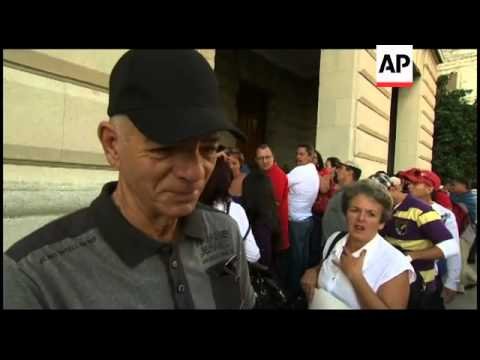
1. Crowd outside Spanish Embassy in Havana, zoom in
2. Wide of people outside embassy
3. Wide of Spanish embassy exterior, traffic
4. Mid of Spanish and European Union flags flying atop embassy
5. Wide of people waiting outside Spanish embassy
6. SOUNDBITE (Spanish) Jorge Vallos, Retiree applying for Spanish citizenship:
“I am very satisfied to have done this on the last possible day. I leave here happy and grateful.”
7. Mid of applicants looking at their paperwork and documents
8. Wide of applicants listening to Spanish embassy official
9. SOUNDBITE (Spanish) Daisy Ramos, Teacher applying for Spanish citizenship:
“Everyone is trying to take advantage of this in order to travel and be able to visit our families; a father, a son, a brother. These are difficult things, family separation is very difficult.”
10. Mid of people entering building
11. Crowd outside Spanish embassy, pull out to wall painted with Cuban government slogan reading (Spanish) “Everything for the Revolution”
STORYLINE
Hundreds of Cubans of Spanish descent packed Spain’s embassy in Havana on Tuesday, hoping to qualify for Spanish citizenship on the last day to apply under the “law of grandchildren”.
The application process closed on Tuesday.
Spain began accepting citizenship applications from the descendants of people who went into exile after its 1936-39 Civil War, part of a 2007 law intended to address the legacy of the conflict and the dictatorship of General Francisco Franco.
A later provision approved in December of 2008 allowed anyone whose parents or grandparents were born in Spain but went overseas because of their political beliefs to become Spanish citizens.
Officials in Madrid estimated that as many as half a million people worldwide are eligible to become citizens.
According to Spanish embassy officials in Havana, more than 180-thousand Cubans have applied for a Spanish passport.
Jorge Vallos, a retiree who waited until the last moment to apply, said he was glad he has submitted his application.
Spanish authorities asked applicants to use the Internet to set up a consular appointment, and most potential Spanish citizens in countries outside of Cuba did go online instead of heading to their local embassy.
Most Cuban nationals however do not have access to the Internet because it is tightly controlled in Cuba, so they have been coming from all over the island to the Spanish embassy in person.
Long lines of people stretched across the streets and parking lots near the Spanish embassy on Tuesday.
Those who receive Spanish citizenship must wait for permission from the Cuban government to travel abroad, a process that is often slow.
Many Cubans use Spain as a springboard to get to the US and be reunited with relatives.
Teacher Daisy Ramos, standing in line outside the Spanish embassy, said people were looking forward to reuniting with their relatives who live abroad.
u
The US Census Bureau estimates that 1.2 (m) million Cubans and Cuban Americans now live in the United States.
Find out more about AP Archive:
Twitter:
Facebook:
Instagram:
You can license this story through AP Archive:
source